A written cancellation policy stops every absence becoming a negotiation. A workable UK studio policy sets the notice you require, which absences earn a make-up credit, what a credit is worth, how long it lasts, how many a pupil may earn in a term, and what happens to unused lessons. Decide it once; apply it to everyone.
Every music teacher eventually has the same week. A parent texts at 8:45 for a 9:00 lesson — “so sorry, can we move it?” Another family misses two Tuesdays running and expects both back in July. A third quietly assumes that paying termly means lessons roll over forever, like minutes on an old phone contract.
None of these people are being unreasonable. They’re filling a vacuum. If your studio doesn’t have a written cancellation policy, every absence becomes a one-off negotiation — and the outcome depends on who’s asking, how tired you are, and how awkward the conversation feels. The most persistent parents win; the fairest ones quietly subsidise them.
A written policy isn’t strictness. It’s kindness, written down — the same answer for everyone, decided once, when nobody’s upset.
What a cancellation policy is actually for
It helps to be clear about the economics first, because your policy is how you explain them.
When a pupil misses a lesson, the cost doesn’t disappear. The slot was reserved — you (or your teacher) turned other enquiries away from it. The teacher was engaged and is being paid. The room was booked. A missed Tuesday 4pm is not a lesson saved for later; it’s a perishable thing that has already expired, like an empty seat on a departed train.
A good policy does three jobs:
- It protects your income — by defining when a missed lesson is still charged, and by giving you enough notice to refill slots when you can.
- It protects the parents who play fair — because “whoever pushes hardest gets a refund” punishes the families who never push.
- It protects the relationship — because the policy takes the blame. “I’m sorry, our policy is 48 hours’ notice” is a much kinder sentence than an improvised no.
The six decisions every policy has to make
Every cancellation policy, however it’s worded, answers six questions. Decide these and the document writes itself — literally, if you use our make-up policy generator, which turns these six answers into a finished policy you can publish today.
1. How much notice earns a make-up?
The UK norm is 24 or 48 hours. Shorter than 24 hours and you can’t realistically refill the slot; longer than a week and you’re asking families to predict illness.
48 hours is the sweet spot for most studios: long enough that you can sometimes offer the slot to another pupil or a waiting-list family, short enough to feel reasonable to parents. If your diary is dense and slots refill easily, 24 hours is generous and parents will love you for it.
2. Which absences qualify?
Three common positions, from most to least generous:
- Any absence with the required notice. Simple and popular — the reason doesn’t matter, the notice does. Easiest to administer because you never have to judge excuses.
- Illness and emergencies only. Feels morally right but puts you in the miserable business of deciding whether a school trip counts. Expect grey areas weekly.
- Only lessons the teacher cancels. The strictest position, and common at conservatoire and high-demand studios. Defensible where demand far exceeds supply.
Whichever you choose, one line is non-negotiable: lessons cancelled by you or your teacher are always made up or credited. Parents accept almost any policy when this is stated plainly, because it shows the rules cut both ways.
3. How are make-ups delivered?
This is where policies most often go wrong, because an open-ended promise of “we’ll rearrange” creates a scheduling debt you can’t actually pay. Three workable models:
- Make-up credits booked into real slots. The absence becomes a credit; the family books it into a genuinely available slot. Clean, trackable, and the model most scheduling software (including ours) is built around.
- Group make-up days at the end of term. One or two published dates where missed lessons happen, often in small groups. Efficient for bigger schools.
- A swap list. Families release slots they can’t use; others book into them. Self-balancing, but availability is never guaranteed and you must say so.
What doesn’t work: “we’ll find a time” — which in practice means make-ups colonise your evenings and holidays, the exact hours the policy exists to protect.
4. When do credits expire?
Make-up credits must expire, and the kindest expiry is the clearest one: end of the current term. Parents understand terms; “use it before the holidays” needs no explanation.
If that feels tight, expire them at the end of the following term. What you should avoid is “never” — open-ended credits accumulate into a liability that distorts next year’s diary, and the conversation when a family tries to redeem five lessons from 2024 is far worse than any expiry rule.
One more line worth including: make-up lessons themselves can’t be rescheduled again, and unused credits have no cash value. Both close loopholes you will otherwise discover the hard way.
5. How many make-ups per term?
A cap protects you from the family whose Tuesdays are simply never free. Two per pupil per term is the common middle ground; one is defensible for high-demand studios; three is generous. Beyond the cap, missed lessons are charged as normal — with the notice rule still deciding whether anything is owed.
6. What happens on a no-show?
A no-show — no message, nobody arrives — is different in kind from a notified absence, and your policy should say so. The standard position: no-shows are charged and not made up. If you want a softer edge, offer one goodwill make-up per term for a first no-show. More than that and “no-show” becomes indistinguishable from “cancelled”, and your notice rule stops meaning anything.
The wording that makes it stick
A few drafting principles that separate policies that hold from policies that leak:
Explain the why, once. A single sentence — “when a lesson is missed, the time has already been reserved and the teacher engaged” — converts the policy from arbitrary rule to obvious fairness. Parents don’t need persuading after that; most have jobs where the same logic applies.
Write it in plain English. “If you give us 48 hours’ notice, the lesson becomes a make-up credit” beats any paragraph containing the word “notwithstanding”. You’re writing for a parent on a phone at a bus stop.
Keep one humanity clause. Something like: “We’ll always be human about genuine emergencies — this policy exists so that fairness doesn’t depend on who asks.” It reserves your right to be kind without making kindness claimable.
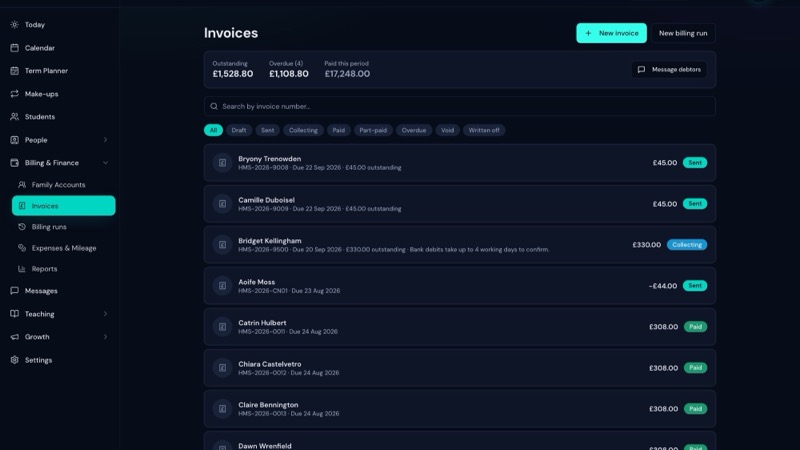
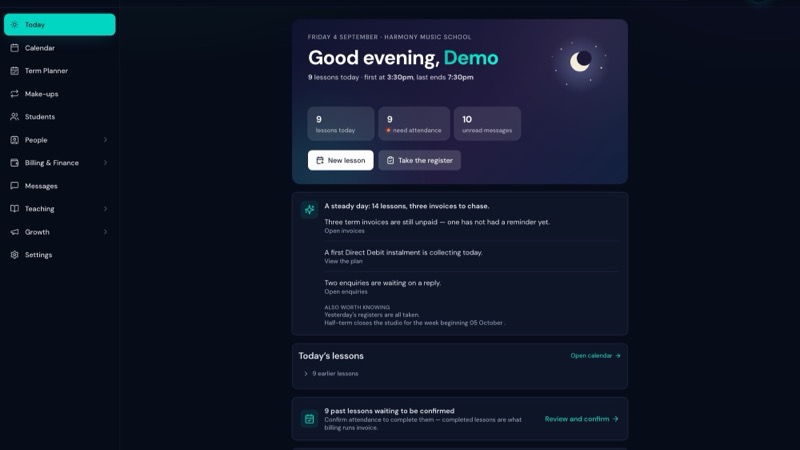
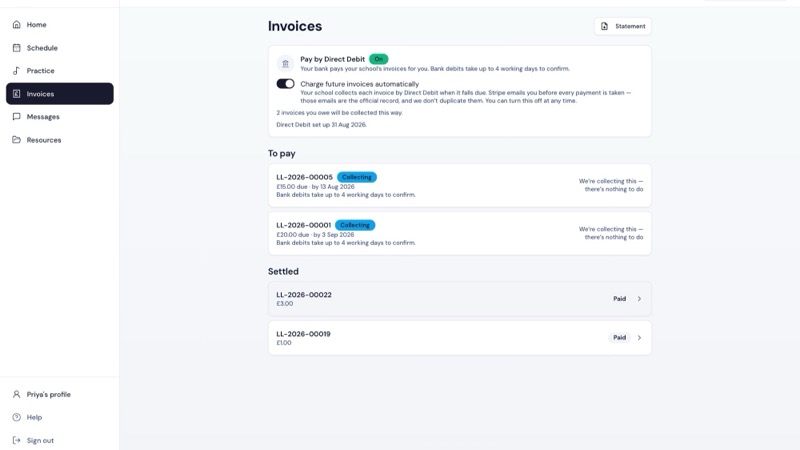
Put it where the decision happens. A policy nobody sees protects nobody. It belongs in your welcome email, on your booking page, and anywhere parents book or cancel. (In LessonLoop the policy is also enforced at the moment of booking — notice windows, credits, expiry and caps applied automatically — which means even an unread policy holds.)
A note on UK consumer law
Two things worth knowing, not as legal advice but as context:
- The Consumer Rights Act 2015 requires contract terms to be fair and transparent. A clearly written, prominently displayed cancellation policy that a parent agreed to at sign-up is on far stronger ground than terms buried in an email from 2023. Blanket “no refunds ever, including lessons we cancel” wording is exactly the kind of one-sided term that doesn’t survive scrutiny — another reason the “we cancel, you’re always credited” line matters.
- The 14-day cooling-off period applies to many contracts agreed online or away from your premises. If families sign up and pay through your website, your terms should acknowledge their statutory cancellation rights for that initial window.
If you’re drafting terms for a larger school, ten minutes with a solicitor reviewing your policy is cheap insurance. For most studios, clear, fair, prominent wording is the bulk of the protection.
Publish it, then stop thinking about it
The whole point of a policy is that it runs without you. Decided once. Written once. Published where parents act. Applied the same way for everyone — by software, ideally, rather than by willpower at 9pm.
The fast way: answer the six questions in our free make-up policy generator and it writes the policy for you — plain English, copy-paste or print, no email required. Pair it with the term date planner so your closure dates are decided at the same time, and the year’s two biggest argument-generators are both retired in an afternoon.
And if you’d like the version where the policy enforces itself — notice windows checked at booking, credits issued and expired automatically, caps applied without a single awkward conversation — that’s what LessonLoop does all year.
Written by Lauren, co-founder of LessonLoop and founder of LTP Music — a 500-pupil music school where every one of these mistakes was made personally before being written down.